

Have you ever created a to-do list in Excel?
After completing a task, you don’t want to delete it because you might need to look at it later.
But at the same time, you want to show that the task is already finished.
So, what can you do?
Instead of deleting the text, you can simply draw a line through it.
This is called Strikethrough.
It’s a simple formatting feature in Excel that adds a line through text or numbers without deleting them. The original content stays visible, making it easy to identify completed tasks, cancelled items or outdated information.
Whether you’re managing a checklist, updating a price list or reviewing office data, Strikethrough helps you keep everything organized.
In this guide, you’ll learn what Strikethrough is, when to use it, and the easiest ways to apply and remove it in Microsoft Excel.
What is Strikethrough in Excel?
Have you ever looked at a worksheet and noticed some text with a line running through it?
That line is called Strikethrough.
Think about a shopping list.
After buying Milk, Bread, and Eggs, you usually don’t erase those items from the list.
Instead, you simply cross them out so you know they’ve already been purchased.
That’s exactly how Strikethrough works in Excel.
It places a horizontal line through the selected text or numbers while keeping the original content visible.
This makes it easy to show that something has been completed, cancelled or is no longer needed without removing it from the worksheet.
That’s why Strikethrough is commonly used in task lists, project trackers, attendance sheets, budgets, and office reports.
Why Use Strikethrough in Excel?
Strikethrough may look like a small formatting feature, but it can make your worksheet much easier to understand.
Here are a few common situations where it’s useful:
- Mark completed tasks in a checklist.
- Show cancelled or outdated information.
- Display old prices while adding new prices.
- Keep a record of changes without deleting the original data.
- Make reports easier to read.
How to Add Strikethrough in Excel?
Excel gives you several ways to apply Strikethrough formatting.
Some methods are quick and perfect for everyday use, while others are helpful if you use Strikethrough regularly.
Let’s look at each method one by one.
Method 1: Using the Keyboard Shortcut:
If you’re looking for the fastest way to apply Strikethrough, this is it.
Steps:
1. Select the cell or cells you want to format.

2. Press Ctrl + 5.

That’s all.
Excel immediately adds a line through the selected text.
If you want to remove the Strikethrough later, press Ctrl + 5 again.
Tip: The shortcut works like an ON/OFF switch. Press it once to apply Strikethrough and press it again to remove it.
Method 2: Format Cells Dialog Box:
If you prefer using Excel’s formatting options, you can apply Strikethrough from the Format Cells dialog box.
Steps:
1. Select the cell or cells.
2. Right-click and choose Format Cells.

3. In the Format Cells dialog box, go to the “Font” tab.

4. Under the Effects section, check the Strikethrough option.
5. Click OK.
Excel will apply Strikethrough to the selected cells.
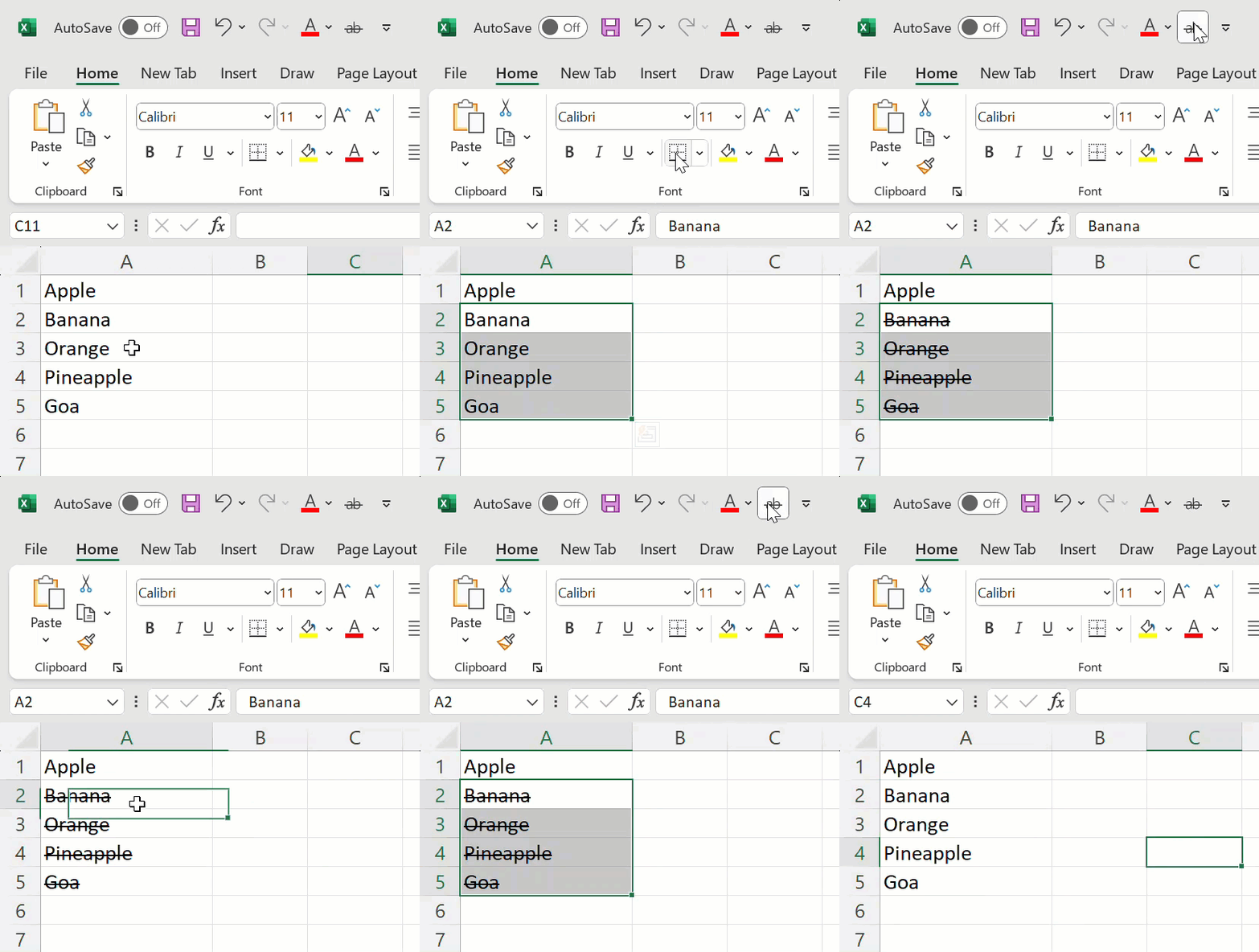
Method 3: Add Strikethrough to the Quick Access Toolbar (Custom Shortcut):
If you use Strikethrough regularly, adding it to the Quick Access Toolbar can save time.
Instead of opening menus every time, you can apply Strikethrough with a single click.
Steps:
1. Click the small drop-down arrow on the Quick Access Toolbar.

2. Select More Commands.
3. Choose All Commands.

4. Scroll down and select Strikethrough.
5. Click Add.
6. Click OK.
Now, whenever you want to use Strikethrough, simply select the cells and click the Strikethrough button.
Method 4: Add Strikethrough to the Ribbon:
The Ribbon in Excel offers a user-friendly method to apply strikethrough formatting:
By default, the Strikethrough command doesn’t appear on the Ribbon.
However, Excel lets you customize the Ribbon and add it yourself.
Steps:
1. Right-click anywhere on the Ribbon.

2. Select Customize the Ribbon.
3. Under Choose commands from, select All Commands.

4. Find Strikethrough in the list.
5. Add it to a custom group.
6. Click OK.

You’ll now have a Strikethrough button on your Ribbon for quick access.
How to Remove Strikethrough in Excel?
Removing Strikethrough is just as easy as applying it.
You can remove it in any of these ways:
- Press Ctrl + 5 again.
- Open the Format Cells dialog box and uncheck Strikethrough.
- Click the Strikethrough button from the Ribbon or Quick Access Toolbar.
Things to Remember:
Before using Strikethrough, keep these points in mind:
- Strikethrough only changes the appearance of the text. It doesn’t delete your data.
- You can remove Strikethrough at any time.
- The Ctrl + 5 shortcut is the quickest way to apply or remove Strikethrough.
- Strikethrough works with both text and numbers.
- It’s best used for completed tasks, cancelled items and outdated information.
Frequently Asked Questions (FAQs):
1. What is Strikethrough in Excel?
Strikethrough is a formatting feature that draws a horizontal line through text or numbers without deleting them.
2. What is the shortcut for Strikethrough in Excel?
Press Ctrl + 5 to apply Strikethrough.
Press the same shortcut again to remove it.
3. Can I remove Strikethrough later?
Yes.
Simply press Ctrl + 5 again or uncheck the Strikethrough option from the Format Cells dialog box.
4. Does Strikethrough delete my data?
No. It only adds a line through the text. Your original data remains unchanged.
5. Can I add a Strikethrough button to the Ribbon?
Yes. Although it’s not available by default, you can customize the Ribbon and add the Strikethrough command.
The Strikethrough feature is a simple but useful way to show that a task is completed or information is no longer needed without deleting it from your worksheet.
Whether you’re managing a checklist, updating a price list, or reviewing office data, Strikethrough helps keep everything clear and organized.
Now that you know the different ways to apply and remove Strikethrough, you can choose the method that works best for you and use Excel more efficiently.
Discover more from Excellopedia
Subscribe to get the latest posts sent to your email.